
If you’ve landed here, you’re probably frustrated. You’ve tried cutting calories, doing crunches, maybe even a juice cleanse, and that belly fat is still stubbornly clinging on.
You’re not imagining it. Belly fat is genuinely one of the hardest types of fat to lose, and most of the advice floating around the internet is either incomplete or outright wrong.
In this article, I’m going to walk you through exactly how to lose belly fat not with gimmicks or crash diets, but with strategies that have real science behind them.
Let’s get into it.
What Is Belly Fat, Really?
Before we talk about how to get rid of it, it helps to understand what you’re dealing with.
There are two types of fat around your midsection.
- Subcutaneous fat the soft fat you can pinch just under your skin.
- Visceral fat the deeper fat that surrounds your internal organs.
Visceral fat is the dangerous one. It’s metabolically active, meaning it releases inflammatory substances and hormones that can disrupt your body’s normal functions, interfere with insulin sensitivity, and increase your risk of heart disease and type 2 diabetes.
So losing belly fat isn’t just about looking better in the mirror, it’s about protecting your long-term health.
Why You Can’t Spot-Reduce Belly Fat
Here’s something a lot of people don’t want to hear: you cannot target fat loss to a specific area of your body.
Doing 500 crunches a day will build stronger abdominal muscles, but it won’t melt the fat sitting on top of them. Spot reduction is a myth that fitness marketing has kept alive for decades.
What does work is reducing your overall body fat percentage through the right combination of diet, exercise, and lifestyle habits.
As your total body fat decreases, your belly fat will decrease too, often disproportionately, which is actually good news.
10 Proven Ways to Lose Belly Fat
Create a Calorie Deficit (The Foundation of Everything)
No strategy on this list will work without this one in place.
To lose fat, your body needs to burn more energy than it takes in. This is called a calorie deficit. When that happens, your body turns to stored fat for fuel.
A deficit of around 300–500 calories per day is a sustainable starting point. This translates to roughly 0.5–1 lb of fat loss per week, which is a pace you can maintain without wrecking your metabolism or losing muscle.
You can create this deficit through.
- Eating slightly less
- Moving more
- Or, ideally, both
Practical tip: Use a free app like Cronometer or MyFitnessPal for 1–2 weeks to understand what you’re actually eating. Most people are surprised by the numbers.
Prioritize Protein at Every Meal
If there’s one dietary change with the most bang for your buck, it’s increasing your protein intake.
Here’s why protein is so powerful for belly fat loss.
- It keeps you fuller for longer, reducing total calorie intake.
- It helps preserve muscle mass during fat loss (muscle burns more calories at rest).
- It has a high “thermic effect”; your body burns more calories digesting protein than it does digesting carbs or fat.
Aim for 0.7–1 gram of protein per pound of your target body weight per day. Good sources include eggs, chicken, fish, Greek yogurt, legumes, cottage cheese, and quality protein shakes.
Cut Added Sugar and Liquid Calories
Sugar, especially added fructose found in processed foods and sweetened drinks, is one of the biggest contributors to visceral fat accumulation.
When you consume more sugar than your liver can process, the excess gets converted to fat and stored around your organs. This is a direct pathway to the kind of deep belly fat that’s hardest to shift.
The biggest offenders to cut.
- Soda and sweetened drinks (including “diet” versions for some people).
- Flavored coffees and energy drinks.
- Packaged snacks and cereals.
- Fruit juice (yes, even 100% natural juice is high in sugar).
You don’t need to eat zero sugar forever. But if you’re drinking soda daily or adding sugar to everything, this one change alone can make a significant difference.
Add More Soluble Fiber to Your Diet
Soluble fiber absorbs water and forms a thick gel in your digestive tract. This slows digestion, keeps you full longer, and crucially has been shown in multiple studies to reduce visceral fat specifically.
One large observational study found that each 10-gram increase in daily soluble fiber intake was associated with a 3.7% reduction in belly fat accumulation over 5 years.
Best sources of soluble fiber.
- Oats and oat bran
- Flaxseeds and chia seeds
- Legumes (lentils, black beans, chickpeas)
- Avocado
- Apples, pears, and berries
Try Intermittent Fasting
Intermittent fasting (IF) has become one of the most popular and well-researched approaches for fat loss — and it works particularly well for belly fat.
The most common method is the 16:8 protocol: you eat within an 8-hour window (say, noon to 8 pm) and fast for the remaining 16 hours.
During the fasting window, insulin levels drop, signaling your body to start burning stored fat for energy.
Research has found that combining intermittent fasting with protein-focused eating led to greater reductions in total body fat and visceral fat compared to simple calorie restriction alone.
A few things to know about IF
- It’s not magic; you still need to eat in a reasonable calorie range during your eating window.
- Black coffee and water are fine during the fast.
- It’s not suitable for everyone (pregnant women, people with certain medical conditions, or a history of disordered eating should consult a doctor first).
If you want a deeper dive into intermittent fasting protocols and how to do them correctly, check out the free intermittent fasting guide on this site. It walks you through everything step by step.
Do HIIT Workouts (High-Intensity Interval Training)
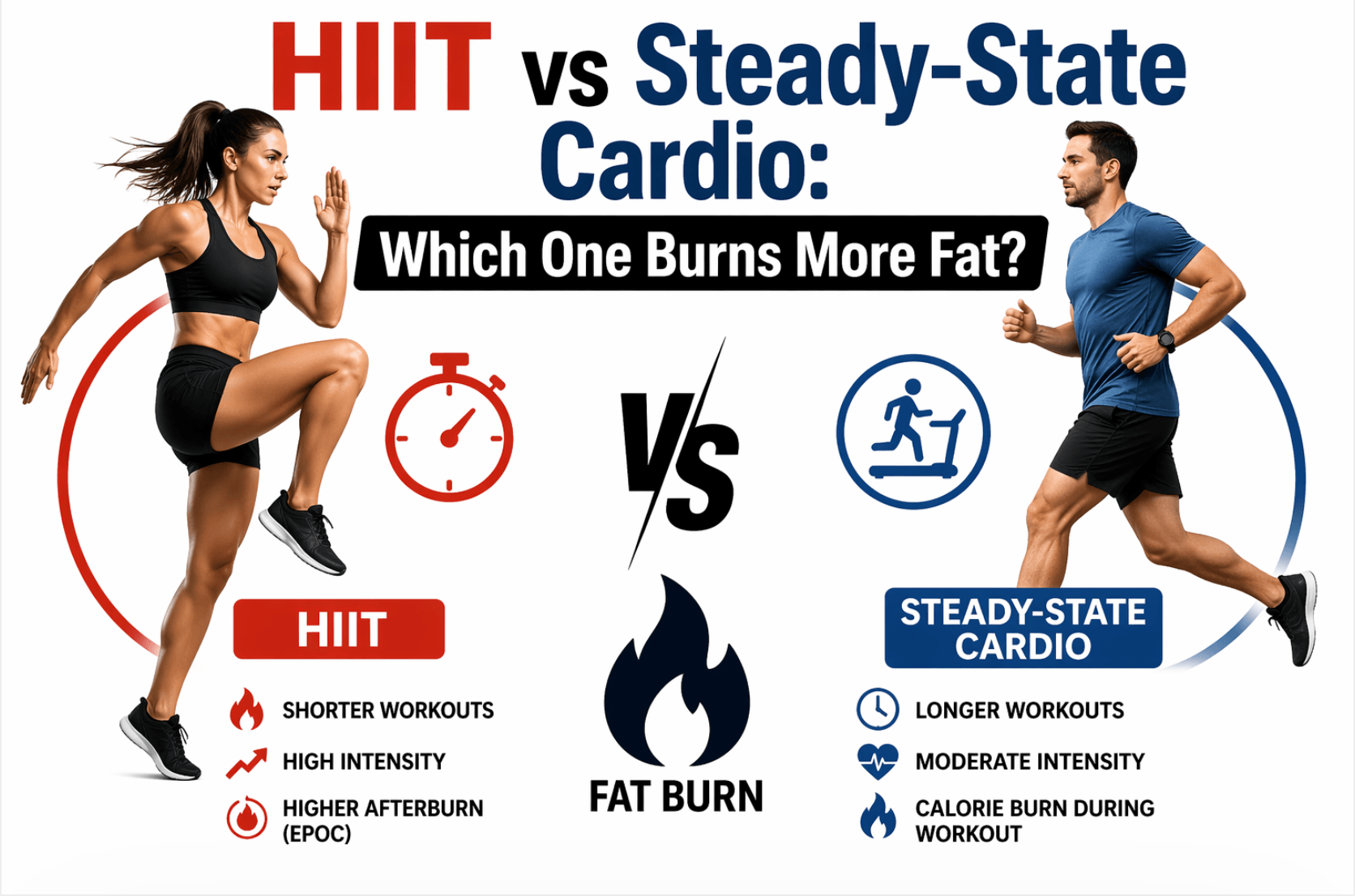
When it comes to exercise specifically for burning belly fat, HIIT stands out above almost everything else.
HIIT involves alternating between short bursts of intense effort and brief recovery periods.
A typical session might look like 30 seconds of sprinting followed by 90 seconds of walking, repeated for 20–30 minutes.
Why HIIT works so well
- It burns a high number of calories in a short time.
- It keeps your metabolism elevated for hours after the workout (the “afterburn effect”).
- Multiple studies have shown it’s particularly effective at reducing visceral fat.
You don’t need a gym. Bodyweight HIIT jump squats, burpees, mountain climbers, and high knees done in your living room work just as well.
Start with 2–3 HIIT sessions per week, and build from there. Going too hard too fast is a common mistake that leads to burnout or injury.
Lift Weights (Strength Training)
Cardio burns calories. Strength training changes your body composition and that distinction matters.
When you build muscle, you increase your resting metabolic rate. Your body burns more calories just to maintain that muscle tissue, even when you’re sitting still. Over time, this creates a compounding fat-burning effect.
Strength training also helps preserve muscle mass when you’re in a calorie deficit, which prevents the “skinny fat” outcome where you lose weight but still look soft.
You don’t need to become a powerlifter. 2–3 sessions per week of full-body resistance training (squats, deadlifts, rows, presses) is plenty to see results.
Manage Your Stress Levels
This one is easy to dismiss but it’s genuinely important.
When you’re chronically stressed, your body produces elevated levels of cortisol, a stress hormone. Chronically high cortisol does several things that directly promote belly fat storage:
- It increases appetite, particularly for high-calorie comfort foods.
- It signals the body to store energy as visceral fat.
- It disrupts sleep (which makes everything worse more on that next)
This is why people under extreme stress often gain weight around the middle, even when they haven’t changed their diet.
Practical stress management strategies.
- Daily walks (even 15–20 minutes) lower cortisol significantly.
- Meditation or breathwork (apps like Calm or Headspace are good starting points).
- Cutting back on caffeine if you’re already wired.
- Reducing your screen time before bed.
Get 7–9 Hours of Quality Sleep
Sleep deprivation is one of the most underestimated factors in weight gain and belly fat accumulation.
Studies show that sleeping fewer than 5 hours per night is associated with significant weight gain.
Poor sleep drives up hunger hormones (ghrelin) and suppresses the hormones that make you feel satisfied (leptin), which means you’ll eat more the next day often without realizing it.
Poor sleep also elevates cortisol, creating a double hit on belly fat storage.
Improving your sleep quality
- Keep a consistent sleep and wake schedule (yes, on weekends too)
- Keep your bedroom cool and dark
- Avoid screens for 30–60 minutes before bed
- Limit alcohol — it disrupts sleep quality even if it helps you fall asleep faster
Walk More Every Day
Walking isn’t glamorous, but it’s criminally underrated as a fat-loss tool.
A brisk 30–45 minute daily walk
- Burns real calories without spiking cortisol the way intense exercise can
- Improves insulin sensitivity
- Reduces stress
- Is sustainable for almost everyone, regardless of fitness level
If you’re aiming for 10,000 steps per day as a baseline, you’ll be covering roughly 4–5 miles.
Over a month, that adds up to hundreds of thousands of additional calories burned without any additional gym time.
Habit stack your walks: listen to a podcast, take calls while walking, or use it as your morning routine to set the tone for the day.
How Long Does It Take to Lose Belly Fat?
There’s no way around the fact that this takes time. Belly fat, especially visceral fat, is accumulated over months or years, and it will take consistent effort over weeks and months to meaningfully reduce it.
Here’s a realistic timeline.
- Weeks 1–2: Bloating reduces, water weight drops, and you may notice your clothes fitting slightly differently.
- Weeks 3–6: Measurable fat loss begins if you’re consistent with diet and exercise.
- Months 2–4: Visible changes in your midsection, especially if you’ve built some muscle.
- Months 4–6+: Significant, lasting changes if habits have been maintained.
The people who get the best results are not the ones who go hardest for two weeks. They’re the ones who make sustainable, consistent changes they can stick to long-term.
The Belly Fat Myth You Need to Stop Believing
“There’s a specific food, supplement, or exercise that burns belly fat.”
There isn’t. Fat burner pills, waist trainers, detox teas, “ab blaster” programs none of these create the conditions for actual fat loss. They just take your money.
The only things that reliably reduce belly fat are.
- A sustained calorie deficit
- Adequate protein intake
- Regular exercise (especially strength training and HIIT)
- Managing stress and sleep
- Consistency over time
Simple? Yes. Easy? Not always. But it works.
Quick Summary: How to Lose Belly Fat
| Strategy | Why It Works |
|---|---|
| Calorie deficit | Sustainable calorie burn lowers cortisol |
| High protein intake | Reduces hunger, preserves muscle |
| Cut added sugar | Reduces visceral fat storage |
| Soluble fiber | Keeps you full, directly reduces visceral fat |
| Intermittent fasting | Lowers insulin, accelerates fat burning |
| HIIT workouts | Burns fat efficiently, elevates metabolism |
| Strength training | Builds metabolism-boosting muscle |
| Stress management | Lowers cortisol-driven fat storage |
| Quality sleep | Controls hunger hormones |
| Daily walking | Sustainable calorie burn, lowers cortisol |
Final Thoughts
Losing belly fat isn’t about a single diet or a magic workout. It’s about stacking the right habits together and giving them time to compound.
Start with the basics: eat more protein, cut liquid sugar, add some daily movement, and prioritize your sleep. Once those are in place, layer in HIIT, strength training, and intermittent fasting.
You don’t have to do everything at once. Pick two or three of these strategies to implement this week and build from there.
If you want a structured plan to follow, including exactly what to eat, how to set up your fasting window, and a beginner-friendly workout routine, grab the free guide available on this page. It’ll save you a lot of trial and error.
Did you find this article useful? Share it with someone who could use it, or drop a comment below with your biggest belly fat challenge. I read everyone.
Disclaimer
This article is for informational purposes only and does not constitute medical advice.
Always consult a qualified healthcare provider before making significant changes to your diet or exercise routine.