
If you’ve ever held a plank until your arms shook and wondered, “Is this actually doing anything for my abs?” you’re not alone.
Planks are one of the most recommended core exercises on the planet, but there’s a lot of confusion about what they actually do for your midsection.
So, do planks give you abs? The short answer is: yes, but not on their own. Let’s break down exactly what planks do to your core, what the science says, and what you need to do to actually see those abs.
What Muscles Do Planks Work?
Before we answer whether planks give you abs, it helps to understand what’s actually happening in your body when you hold one.
A standard forearm plank or high plank engages far more muscles than most people realize. Here’s what’s firing when you’re in position.
Rectus abdominis
This is the “six-pack” muscle that runs vertically along your stomach. Planks activate it isometrically, meaning it contracts without actually shortening.
Transverse abdominis
The deepest layer of your core is often called your “inner corset.” This is arguably the most important muscle for core stability, and planks target it directly.
Internal and external obliques
Your side abdominals, which are crucial for rotational movement, and that tapered waist look.
Erector spinae
The muscles running along your spine that help you maintain a neutral back position.
Glutes, quads, and shoulders
A proper plank is a full-body hold, which is part of what makes it so effective.
So yes, planks absolutely work your ab muscles. But working your abs and having visible abs are two very different things.
Do Planks Build Ab Muscle?
Planks are an isometric exercise, which means your muscles are contracting and working hard without movement.
Research shows that isometric exercises like planks are effective at building muscular endurance and increasing muscle activation, but they’re not the most efficient way to add significant muscle size (hypertrophy).
That said, if you’re a beginner or returning to exercise, planks can absolutely help you build a stronger, more defined core.
Over time, as your body adapts, you’ll need to progress to harder variations (more on that below) to keep seeing gains.
Bottom line
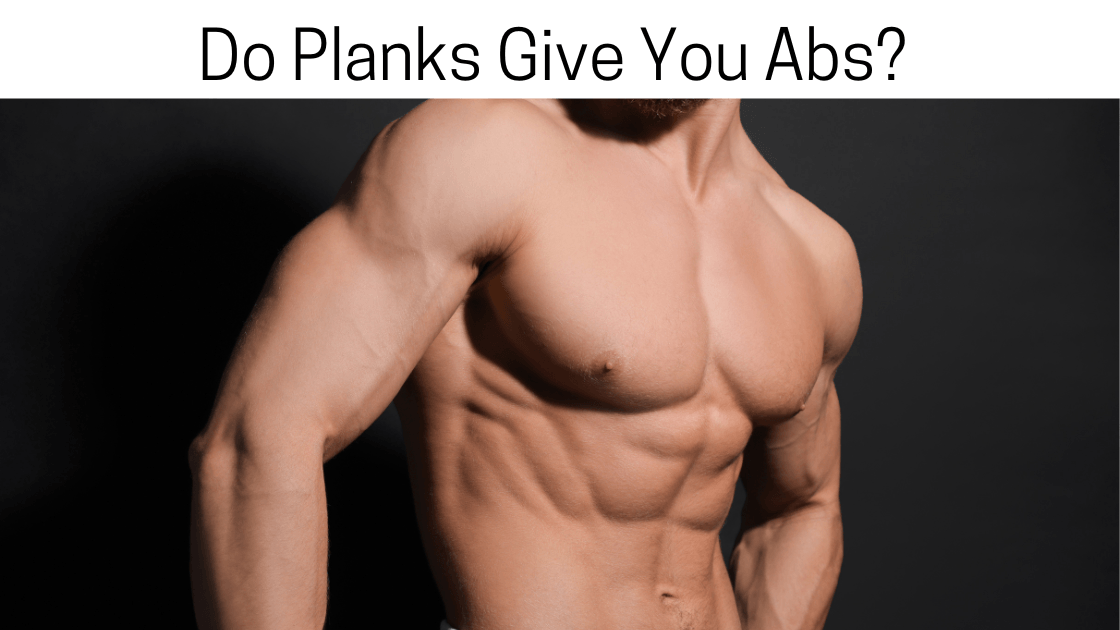
Planks build and strengthen your ab muscles. Whether those muscles are visible depends on your body fat percentage, which brings us to the most important factor.
The Fat Loss Factor: Why You Can’t “Plank” Your Way to Abs
Here’s the truth that most fitness content glosses over: you cannot spot-reduce fat. No matter how many planks you do, you cannot force your body to burn fat from your stomach specifically.
Visible abs require a low enough body fat percentage for the muscles underneath to show through. For most people, that’s roughly:
- Men: Under ~15% body fat (ideally under 12% for clear definition)
- Women: Under ~22% body fat (ideally under 18-20% for definition)
Your genetics also play a role in where your body stores and loses fat. For many people, the belly is the final frontier.
This means that if you want visible abs, diet and overall caloric deficit are far more important than any single exercise.
You could have incredibly strong, developed abs from planks, but if they’re covered by a layer of fat, they simply won’t show.
What Planks Actually Give You (And It’s Impressive)
Even if planks alone won’t carve out a six-pack, dismissing them would be a mistake. Here’s what consistent planking genuinely delivers.
A Stronger, More Stable Core
Your core is the foundation of virtually every movement you make from lifting groceries to running to sitting at your desk.
Planks build deep, functional core strength that supports your spine and improves your performance in almost every other exercise.
Better Posture
A strong transverse abdominis and erector spinae help you maintain proper spinal alignment throughout the day.
Many people find that consistent planking reduces lower back pain and helps them stand taller naturally.
Improved Athletic Performance
Whether you’re a runner, cyclist, weightlifter, or weekend warrior, core stability translates directly to better performance.
Planks train your body to resist movement which is exactly what your core needs to do when you’re lifting heavy or moving fast.
A Flatter-Looking Stomach
Even without dramatic fat loss, strengthening the transverse abdominis can help “pull in” your midsection, giving the appearance of a flatter stomach. Think of it as tightening that inner corset.
Reduced Lower Back Pain
Studies have shown that core stability exercises, including planks, can help alleviate and prevent chronic lower back pain one of the most common complaints among adults.
How Long Should You Plank for Results?
There’s a common misconception that longer = better when it comes to planks. But quality always beats quantity.
Here are evidence-based guidelines.
- Beginners: Aim for 3 sets of 20–30 seconds with good form
- Intermediate: Work toward 3 sets of 45–60 seconds
- Advanced: 3 sets of 60–90 seconds, or progress to harder variations
Important: A shaky, sagging, or arched plank for 3 minutes is far less effective and more injury-prone than a perfect plank held for 30 seconds. Always prioritize form.
Signs Your Plank Form Is Off (And How to Fix It)
Poor form is one of the biggest reasons people don’t see results from planks. Watch out for these common mistakes.
❌ Hips sagging → Your lower back is unprotected. Squeeze your glutes and draw your navel toward your spine.
❌ Hips too high → You’re reducing core activation. Your body should form a straight line from head to heels.
❌ Holding your breath → Breathe steadily. Exhale and brace your core on each breath.
❌ Head drooping or craning up → Keep your neck neutral. Your gaze should be directed toward the floor, about a foot in front of your hands.
❌ Shoulders shrugging up to your ears → Actively press the floor away and keep your shoulders down and back.
Plank Variations to Accelerate Your Results
Once you’ve mastered the standard plank, these progressions will challenge your core in new ways and speed up your results:
Side Plank
Targets the obliques (side abs) more intensely than a standard plank. Stack your feet or stagger them for balance, and hold each side for equal time.
Plank with Shoulder Tap
From a high plank, alternate tapping each shoulder with the opposite hand. This adds an anti-rotational challenge to your core, which works overtime to keep your hips from swiveling.
RKC Plank (Hard Style Plank)
An intensified version of the standard plank where you squeeze everything, glutes, quads, fists as hard as possible. Studies have shown that this variation increases muscle activation dramatically. Hold for just 10–20 seconds.
Plank to Downward Dog
Flow between a plank and downward dog position to add dynamic challenge and improve mobility simultaneously.
Weighted Plank
Have a partner place a weight plate on your upper back, or wear a weighted vest. This is an advanced progression that significantly increases the resistance on your core.
Plank Pull-Through
In a high plank position, pull a dumbbell or resistance band from one side to the other, alternating hands. Excellent for anti-rotation strength and oblique development.
The Complete Formula for Visible Abs
If your goal is not just a strong core but visible abs, here’s the honest roadmap.
Step 1: Build the Muscle
Include planks and other core exercises (crunches, leg raises, cable crunches, hollow body holds) 2–4 times per week. You need developed muscle for it to show.
Step 2: Manage Your Diet
You cannot out-exercise a poor diet. Focus on:
- A moderate caloric deficit (300–500 calories below maintenance)
- High protein intake (0.7–1g per pound of bodyweight) to preserve muscle while losing fat
- Whole, minimally processed foods
- Adequate hydration
Step 3: Add Cardio Strategically
Cardiovascular exercise accelerates the caloric deficit needed for fat loss. HIIT (High-Intensity Interval Training) is particularly effective for reducing abdominal fat.
Aim for 150–300 minutes of moderate cardio per week, or 75–150 minutes of vigorous cardio.
Step 4: Prioritize Sleep and Stress Management
Chronic sleep deprivation and high cortisol (the stress hormone) directly contribute to belly fat storage.
Even the perfect diet and workout plan will be undermined by poor sleep. Aim for 7–9 hours per night.
Step 5: Be Patient
Visible abs are one of the hardest physique goals to achieve because of where the body tends to store fat last.
For most people, it takes months of consistent effort — but the strength and health benefits come much sooner.
How Often Should You Do Planks?
For most people, doing planks 3–5 times per week is ideal. Your core muscles, like all muscles, need recovery time between sessions, especially if you’re doing intense variations or weighted planks.
You can plank daily if you’re doing moderate-intensity holds (under 60 seconds per set), but listen to your body. If your core is consistently sore, take a rest day.
Do Planks Reduce Belly Fat?
This is one of the most common questions, and the answer is: not directly. As mentioned earlier, spot reduction is a myth.
Planks burn some calories (more than you might think a 150-pound person burns roughly 3–4 calories per minute planking), but they don’t specifically target belly fat.
What planks do is build the muscle underneath the fat, improve your metabolism slightly through muscle maintenance, and contribute to your overall caloric expenditure.
Combined with a caloric deficit, this absolutely supports fat loss including from your belly.
Frequently Asked Questions
Can planks alone give me a flat stomach?
Planks strengthen the muscles beneath your stomach and can improve its appearance, but a truly flat stomach requires managing body fat through diet and overall activity levels.
How many planks should I do a day to see results?
Quality over quantity. Three sets of planks held with perfect form progressing from 20 seconds to 60+ seconds over weeks is more effective than endless shaky reps.
Are planks better than crunches for abs?
They’re different tools. Planks excel at building core stability and engaging deep core muscles.
Crunches better isolate the rectus abdominis through movement. Ideally, include both in your routine.
How long does it take to see results from planks?
You may feel increased core strength and stability within 2–4 weeks. Visible changes in muscle tone depend heavily on your diet and starting body composition, and typically take 8–12+ weeks of consistent effort.
Is a 1-minute plank impressive?
A solid 60-second plank with perfect form is a great benchmark for general fitness. Most fitness standards consider 2+ minutes advanced and 3+ minutes elite, though raw duration matters less than form and progression.
The Verdict: Do Planks Give You Abs?
Yes, planks work and strengthen your abdominal muscles without question. They’re one of the most efficient, equipment-free exercises you can do for core stability, posture, and functional strength.
But “getting abs” in the visible sense requires more than just planking. It requires:
✅ Building core muscle through consistent training (planks are great for this)
✅ Reducing body fat through a sustainable caloric deficit
✅ Eating enough protein to preserve muscle
✅ Getting adequate sleep and managing stress
✅ Being patient — it takes time
Add planks to a well-rounded fitness plan, stay consistent with your nutrition, and those abs will emerge. They were always there. You’re just working to reveal them.