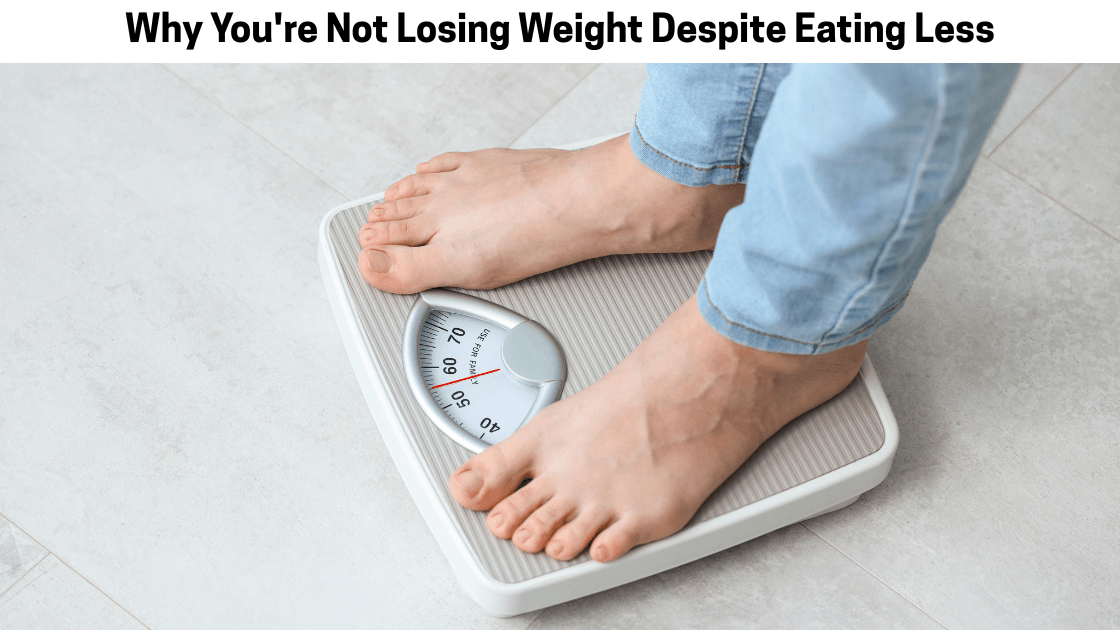


You’ve been eating less, exercising more, and doing everything “right,” yet the scale has stopped moving.
Sound familiar? You’re not imagining it. What you’re likely experiencing is metabolic adaptation, one of the most frustrating and misunderstood phenomena in the world of weight loss.
Understanding metabolic adaptation isn’t just an academic exercise. It’s the missing piece that explains why most diets eventually stop working and why so many people regain the weight they worked so hard to lose.
More importantly, once you understand it, you can take concrete steps to reverse it.
In this guide, we’ll break down exactly what metabolic adaptation is, why your body does it, and most importantly, what you can do about it.
What Is Metabolic Adaptation?
Metabolic adaptation (also called adaptive thermogenesis) is the process by which your body reduces its total energy expenditure in response to sustained caloric restriction or significant weight loss. In plain terms, when you diet, your body fights back by burning fewer calories.
This isn’t a flaw in your willpower or discipline. It’s a deeply ingrained survival mechanism.
Your body interprets prolonged calorie deficits as a famine and adjusts accordingly slowing down your metabolism to conserve energy and keep you alive.
The Difference Between Expected and Adaptive Calorie Reduction
When you lose weight, you naturally burn fewer calories because you have less body mass to move and maintain.
That part is expected and predictable. Metabolic adaptation is additional beyond that of a suppression of metabolism that exceeds what weight loss alone would predict.
Research has shown that metabolic adaptation can cause people to burn 200–500 fewer calories per day than predicted, even after accounting for their lower body weight.
For some individuals especially those who have lost significant weight, the drop can be even greater.
Why Does Metabolic Adaptation Happen?
Your metabolism isn’t a fixed machine. It’s a dynamic system that responds to signals from your environment, your hormone levels, your activity, and your food intake. Here’s what happens when you enter a prolonged calorie deficit:
Hormonal Shifts
Several hormones shift dramatically during caloric restriction.
- Leptin (the “satiety hormone”) drops significantly, reducing the signal that tells your brain you’re full, and your metabolism should stay elevated.
- Thyroid hormones (T3 in particular) decrease, slowing the rate at which your body burns fuel.
- Cortisol (the stress hormone) tends to rise, encouraging fat storage and muscle breakdown.
- Ghrelin (the hunger hormone) increases, making you feel hungrier than before you ever started dieting.
This hormonal cocktail is your body’s way of nudging you back toward your previous weight.
Reduced Non-Exercise Activity Thermogenesis (NEAT)
One of the most overlooked components of metabolic adaptation is the reduction in NEAT the calories you burn through all movement that isn’t formal exercise.
This includes fidgeting, walking, standing, and even unconsciously adjusting your posture.
Studies have shown that when people diet, they subconsciously move less throughout the day.
You might take fewer steps, sit more, and generally become less restless all without realizing it.
This reduction in NEAT can account for a significant portion of your metabolic slowdown.
Muscle Loss
Caloric restriction, especially without adequate protein intake and resistance training, often leads to the loss of lean muscle mass.
Since muscle is a metabolically active tissue (it burns more calories at rest than fat), losing it further reduces your total daily energy expenditure.
Increased Metabolic Efficiency
During caloric restriction, your body becomes more efficient at using the fuel you give it.
While this sounds like a good thing, in the context of weight loss, it means your body extracts more energy from the same amount of food, effectively increasing the “caloric value” of what you eat.
How Do You Know If You’re Experiencing Metabolic Adaptation?
Metabolic adaptation doesn’t announce itself, but there are telling signs:
- Weight loss has stalled despite maintaining your calorie deficit
- You feel cold all the time, even in warm environments (a sign of reduced thermogenesis)
- Persistent fatigue and low energy, even with adequate sleep
- Constant hunger that doesn’t improve over time
- Mood changes, irritability, and difficulty concentrating
- You’re eating very little (under 1,200–1,400 calories) but still not losing weight
- Your workouts feel harder, and your performance has declined
If several of these resonate, metabolic adaptation is likely playing a role in your weight loss plateau.
How to Reverse Metabolic Adaptation
Here’s the good news: metabolic adaptation is not permanent. Your metabolism can recover. Here are the most evidence-backed strategies to reverse it.
Strategy 1: Diet Breaks
A diet break is a planned, temporary return to maintenance calories — typically lasting one to two weeks before resuming your calorie deficit.
Research supports diet breaks as an effective tool for preserving metabolic rate. A landmark study known as the MATADOR study found that participants who took two-week diet breaks every two weeks lost more fat and experienced less metabolic adaptation than those who dieted continuously.
How to implement a diet break:
- Calculate your estimated maintenance calories (Total Daily Energy Expenditure, or TDEE)
- Eat at maintenance for 1–2 weeks, prioritizing protein and whole foods
- Return to your deficit after the break
- Plan diet breaks every 8–12 weeks of continuous dieting
Strategy 2: Reverse Dieting
Reverse dieting involves gradually increasing your calorie intake after a period of restriction, to raise your metabolic rate over time without gaining significant fat.
Instead of jumping straight from a deficit back to maintenance (or beyond), you add calories slowly, typically 50–100 calories per week, giving your hormones, NEAT, and metabolic rate time to adjust upward.
Reverse dieting is especially useful if:
- You’ve been eating very low calories for an extended period
- You’ve hit a prolonged plateau and need to reset before cutting again
- You’re transitioning from a cut to a maintenance or muscle-building phase
Strategy 3: Prioritize Protein
Protein is the single most important macronutrient for preserving your metabolic rate during weight loss, for two main reasons:
- Muscle preservation: Adequate protein (typically 0.7–1.0g per pound of body weight) helps prevent muscle loss, keeping your metabolically active tissue intact.
- Thermic effect of food: Protein has a much higher thermic effect than carbohydrates or fats — your body burns about 20–30% of protein calories just through the digestion process, compared to 5–10% for carbs and 0–3% for fat.
Make protein the anchor of every meal. Prioritize lean sources like chicken, turkey, fish, eggs, Greek yogurt, cottage cheese, and legumes.
Strategy 4: Incorporate Resistance Training
Lifting weights is one of the most powerful tools for combating metabolic adaptation. Resistance training:
- Preserves and builds lean muscle mass, keeping your resting metabolic rate elevated
- Creates an “afterburn” effect (excess post-exercise oxygen consumption, or EPOC) that keeps your metabolism elevated for hours after your workout
- Improves insulin sensitivity and hormonal health
Aim for at least 3 resistance training sessions per week, focusing on compound movements like squats, deadlifts, rows, and presses.
Strategy 5: Stay Active Throughout the Day (Protect Your NEAT)
Since NEAT is often the first casualty of metabolic adaptation, deliberately protecting and boosting it can make a meaningful difference.
Practical ways to increase NEAT:
- Set hourly reminders to stand up and move
- Take the stairs instead of the elevator
- Walk during phone calls
- Park farther from your destination
- Use a standing desk for part of your workday
- Aim for a daily step count goal (10,000 steps is a reasonable target for most people)
Even small increases in daily movement add up to significant calorie expenditure over time.
Strategy 6: Avoid Extreme Calorie Restriction
The deeper your calorie deficit, the more aggressive your body’s adaptive response. Instead of cutting calories drastically, aim for a moderate deficit of 300–500 calories per day below your TDEE.
This produces slower weight loss, but:
- Minimizes hormonal disruption
- Better preserves muscle mass
- Reduces hunger and fatigue
- Is far more sustainable long-term
Slow, steady weight loss even if less satisfying, creates the conditions for lasting metabolic health.
Strategy 7: Get Adequate Sleep
Sleep is profoundly underrated in its impact on metabolism and hormonal health. Chronic sleep deprivation:
- Raises cortisol levels, promoting fat storage
- Increases ghrelin (hunger) and decreases leptin (satiety)
- Reduces insulin sensitivity
- Impairs the body’s ability to preferentially burn fat for fuel
Aim for 7–9 hours of quality sleep per night. Treating sleep as a non-negotiable part of your weight loss strategy — not a luxury — can meaningfully support metabolic recovery.
Strategy 8: Manage Stress
Chronic psychological stress elevates cortisol chronically, which compounds the hormonal chaos of dieting.
Cortisol promotes muscle breakdown, increases appetite (particularly for calorie-dense foods), and encourages abdominal fat storage.
Incorporate stress management practices such as:
- Meditation or mindfulness
- Regular walks in nature
- Journaling
- Social connection
- Limiting news and screen exposure before bed
How Long Does It Take to Reverse Metabolic Adaptation?
There’s no universal timeline, as it depends on how long and how severely you’ve been in a deficit, your starting metabolic rate, and individual hormonal factors. However, research and clinical experience suggest:
- Short-term relief can begin within 1–2 weeks of a diet break or increasing calories
- Significant hormonal recovery (particularly leptin and thyroid hormones) typically requires 4–12 weeks at maintenance or above
- Full metabolic recovery after prolonged, severe restriction may take several months
Be patient and focus on the process. Metabolic recovery is real, and it does happen, but it takes consistent, intentional effort.
Common Myths About Metabolic Adaptation
“My metabolism is broken.”
It isn’t. It’s adapted. There’s an important distinction: adaptation is reversible, “broken” suggests permanence. With the right strategies, your metabolic rate can be meaningfully restored.
“I just need to eat even less.”
This is one of the most counterproductive responses to a plateau. Cutting calories further when you’re already experiencing adaptation deepens the hormonal disruption and makes recovery harder. More restrictions are rarely the answer.
“Cardio will fix it.”
Excessive cardio during a plateau can actually worsen metabolic adaptation by increasing energy expenditure (which your body compensates for) while also raising cortisol and increasing muscle breakdown risk. Moderate cardio is fine; cardio as a punishment for plateaus is not.
“Metabolic adaptation is just an excuse.”
This myth is harmful. Decades of peer-reviewed research confirm that metabolic adaptation is a real, measurable, physiological phenomenon. Dismissing it prevents people from making informed, effective decisions about their health.
The Bottom Line
Metabolic adaptation is your body doing exactly what it evolved to do: protecting you from starvation. It’s not a character flaw or a sign that you’ve failed. It’s biology.
But understanding it puts you back in control. By implementing strategies like diet breaks, reverse dieting, adequate protein intake, resistance training, NEAT protection, and lifestyle habits that support hormonal health, you can work with your metabolism not against it.
The goal isn’t just to lose weight. It’s to lose weight in a way that leaves your metabolism healthy, your hormones balanced, and your results lasting. Now you have the roadmap to do exactly that.
Looking for more evidence-based weight loss strategies? Explore the rest of Weight Loss Dossier for in-depth guides built on real science.