

If you’ve ever wondered why some people seem to lose weight effortlessly while others struggle despite eating “healthy,” the answer often comes down to one number: TDEE. Understanding your Total Daily Energy Expenditure is one of the most powerful tools you can use to take control of your weight and your health.
In this guide, we’ll break down exactly what TDEE is, how it’s calculated, and why it’s the foundation of any successful, science-backed weight loss strategy.
What Is TDEE? (Total Daily Energy Expenditure)
TDEE stands for Total Daily Energy Expenditure. It represents the total number of calories your body burns in 24 hours, from keeping your heart beating while you sleep to digesting food to running a 5K.
Think of TDEE as your body’s personal calorie budget. When you eat exactly at your TDEE, your weight stays the same.
Eat less, and you lose weight. Eat more, and you gain weight. It really is that simple at its core.
| Key Takeaway TDEE is the total calories your body burns each day. It is the single most important number for understanding weight management. |
The 4 Components of TDEE
Your TDEE is not one simple calculation it’s actually the sum of four distinct components:
BMR (Basal Metabolic Rate)
Your BMR is the number of calories your body burns at complete rest just to maintain basic life functions, such as breathing, circulating blood, regulating body temperature, and keeping your organs running. BMR typically accounts for 60–75% of your total TDEE.
TEF (Thermic Effect of Food)
Every time you eat, your body uses energy to digest, absorb, and metabolize nutrients. This is the Thermic Effect of Food.
Protein has the highest TEF (20–30%), followed by carbohydrates (5–10%) and fats (0–3%). TEF makes up roughly 10% of your daily calorie burn.
EAT (Exercise Activity Thermogenesis)
This is the energy burned during intentional workouts — gym sessions, running, cycling, swimming, and other structured exercise.
EAT can range dramatically from person to person based on frequency, intensity, and duration of workouts.
NEAT (Non-Exercise Activity Thermogenesis)
NEAT is one of the most underrated components of TDEE. It covers all movement that isn’t formal exercise walking to your car, fidgeting, doing laundry, standing at your desk, and even gesturing when you talk.
NEAT can vary by up to 2,000 calories per day between individuals, which explains a huge part of why people gain or lose weight differently.
How to Calculate Your TDEE
Calculating TDEE is a two-step process: first, estimate your BMR, then multiply by an activity factor.
Step 1: Calculate Your BMR
The most widely used formula is the Mifflin-St Jeor equation:
| For Men | BMR = (10 × weight in kg) + (6.25 × height in cm) − (5 × age in years) + 5 |
| For Women | BMR = (10 × weight in kg) + (6.25 × height in cm) − (5 × age in years) − 161 |
Step 2: Multiply by Your Activity Level
Once you have your BMR, multiply it by the appropriate activity factor:
| Activity Level | Multiplier | Description |
| Sedentary | × 1.2 | Little to no exercise, desk job |
| Lightly Active | × 1.375 | Light exercise 1–3 days/week |
| Moderately Active | × 1.55 | Moderate exercise 3–5 days/week |
| Very Active | × 1.725 | Hard exercise 6–7 days/week |
| Extra Active | × 1.9 | Very hard exercise, physical job |
Why TDEE Matters for Weight Loss
Here’s the part that changes everything. Once you know your TDEE, you have the power to engineer weight loss with precision instead of guessing.
Creating a Calorie Deficit
Weight loss happens when you consistently consume fewer calories than your TDEE. This is called a calorie deficit.
A deficit of 500 calories per day theoretically leads to about 0.5 kg (1 lb) of fat loss per week.
| Safe deficit range: Most nutrition experts recommend a deficit of 300–750 calories per day. Larger deficits can lead to muscle loss, nutrient deficiencies, and metabolic adaptation. |
Avoiding the Starvation Trap
One of the biggest mistakes in dieting is eating far below your TDEE without understanding the consequences.
When you drop calories too aggressively, your body adapts by lowering your BMR a phenomenon often called “metabolic adaptation” or “adaptive thermogenesis.” This is why crash diets fail long-term and why TDEE awareness is so critical.
Why Calorie Counting Without TDEE Fails
Many people track calories but don’t know their TDEE. They might aim for 1,500 calories per day without realizing their TDEE is 3,000 meaning they’re losing weight faster than healthy, or that it’s only 1,600, meaning they’re barely in a deficit at all. TDEE gives you your personal baseline.
TDEE vs. BMR vs. Maintenance Calories: What’s the Difference?
These three terms are often confused:
- BMR: Calories burned at complete rest. Your body’s minimum energy requirement.
- TDEE: Total calories burned in a real day, including all activity. Always higher than BMR.
- Maintenance Calories: The number of calories that keep your weight stable. This equals your TDEE.
Put simply: Eating at TDEE = maintenance. Eating below TDEE = weight loss. Eating above TDEE = weight gain.
Factors That Affect Your TDEE
Your TDEE is not a fixed number. It fluctuates based on several variables:
- Age: BMR declines by about 1–2% per decade after age 30.
- Body Composition: Muscle burns more calories than fat, so more lean mass = higher TDEE.
- Sex: Men generally have higher TDEE due to greater muscle mass and lower body fat percentages.
- Height and Weight: Larger bodies require more energy to maintain.
- Activity Level: The most controllable variable. More movement = higher TDEE.
- Hormones: Thyroid function, cortisol, and insulin all influence metabolic rate.
- Diet History: Chronic dieting can lower your TDEE over time through adaptive thermogenesis.
How to Use TDEE to Lose Weight (Step-by-Step)
Here’s a practical framework for using TDEE to drive sustainable weight loss:
Step 1: Calculate Your TDEE
Use the Mifflin-St Jeor equation above, or use a reliable online TDEE calculator. Be honest about your activity level. Most people overestimate how active they are.
Step 2: Set a Moderate Calorie Deficit
Subtract 300–500 calories from your TDEE for a sustainable deficit. For example, if your TDEE is 2,200 calories, aim for 1,700–1,900 calories per day.
Step 3: Prioritize Protein
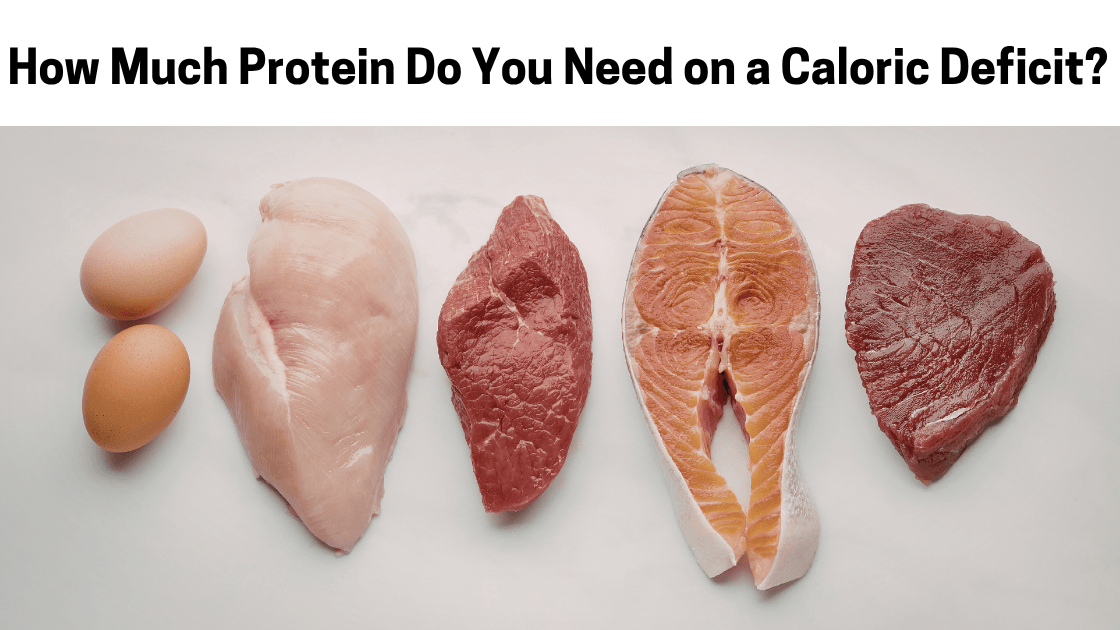
High protein intake (0.7–1g per pound of bodyweight) helps preserve muscle during weight loss, keeps you fuller longer, and has the highest TEF of all macronutrients.
Step 4: Track Your Intake
Use a food tracking app to stay consistent. You don’t need to track forever, but doing so for 4–8 weeks builds a strong awareness of your eating habits.
Step 5: Reassess Every 4–6 Weeks
As you lose weight, your TDEE decreases. Recalculate every month to ensure your deficit is still accurate. This prevents plateaus.
Common TDEE Mistakes to Avoid
- Overestimating your activity level: If you sit at a desk all day and hit the gym 3x a week, you’re likely “Lightly Active,” not “Very Active.”
- Not adjusting TDEE as you lose weight: A 200-lb person and a 160-lb person have very different TDEEs, even if they’re the same individual at different points in time.
- Ignoring NEAT: Small movements throughout the day add up significantly. Use a step tracker to stay accountable.
- Setting too large a deficit: Extreme deficits are unsustainable and often result in muscle loss, fatigue, and rebound weight gain.
- Using TDEE as a reason to skip nutrition quality: Calories matter for weight, but micronutrients, fiber, and food quality matter for health. Focus on both.
TDEE and Exercise: What You Need to Know
Exercise can significantly boost your TDEE, but it’s easy to overcompensate by eating more post-workout.
Research consistently shows that people often eat back most or all of the calories they burn during exercise, sometimes more.
There are two ways to handle exercise in relation to TDEE:
Include it in your TDEE calculation
Use an activity factor that accounts for your workouts. This is simpler and works well for people with consistent exercise routines.
Treat exercise calories separately
Start with a sedentary TDEE, then add calories burned during workouts. This is better for people with irregular schedules.
Either method works — what matters is consistency and accuracy.
FAQ: What Is TDEE?
How accurate are TDEE calculators?
TDEE calculators provide an estimate, not an exact figure. Most are accurate within 10–15% for the average person.
The best approach is to use a calculator as a starting point, then adjust based on real-world results over 2–4 weeks.
Should I eat back the calories I burn during exercise?
It depends on how you calculated your TDEE. If you used a sedentary multiplier, you should add some exercise calories back.
If you used a higher activity multiplier, your TDEE already accounts for exercise. Avoid eating back calories to create a larger deficit but don’t under-eat either.
Why is my weight loss stalling even though I’m in a deficit?
Several factors can cause a stall: water retention, inaccurate calorie tracking, metabolic adaptation, or changes in body composition (gaining muscle while losing fat).
Reassess your TDEE, double-check your food tracking accuracy, and consider a short diet break if you’ve been in a deficit for more than 12 weeks.
What is a safe calorie deficit for weight loss?
A deficit of 300–750 calories per day is generally considered safe and sustainable for most adults.
Deficits larger than 1,000 calories per day increase the risk of muscle loss, nutritional deficiency, and hormonal disruption.
How to calculate your calorie deficit
Does TDEE change as I lose weight?
Yes. As your body weight decreases, your TDEE decreases too, because there is less mass to maintain.
This is why weight loss often slows over time. Recalculating your TDEE every 4–6 weeks or whenever you lose 5+ pounds is important.
Can I increase my TDEE?
Absolutely. The most effective ways to raise TDEE are: building muscle through strength training (increases BMR), increasing NEAT (walking more, fidgeting, standing), and adding structured cardio. A higher TDEE gives you more calorie flexibility while still losing weight.
Is TDEE the same as maintenance calories?
Yes, in practical terms, they are the same thing. Eating at your TDEE means you are consuming exactly as many calories as you burn, which maintains your current weight. TDEE and maintenance calories are used interchangeably.
Do I need to count calories to use TDEE for weight loss?
Calorie tracking is the most reliable way to apply TDEE knowledge, especially when starting.
That said, once you have a strong understanding of portion sizes and food calorie density, many people successfully manage their intake without strict tracking by using portion control and mindful eating strategies.
The Bottom Line
TDEE is not just a number it’s the foundation of evidence-based weight management.
When you understand how many calories your body actually needs, you can make informed decisions about food and exercise instead of relying on guesswork or one-size-fits-all diet rules.
Start by calculating your TDEE today. Set a moderate, sustainable calorie deficit. Prioritize protein, stay consistent, and reassess every few weeks.
That’s the framework that works, not because it’s a secret, but because it’s backed by science.