
Losing weight can feel overwhelming, especially when you’re trying to do it sustainably. If you’re considering a stationary bike as your go-to tool, you’re on the right path.
This low-impact machine offers a solid cardio workout, helps you burn calories, and, when paired with a proper diet, can absolutely transform your body. I speak from real experience, and I’ll share every detail with you.
Why a Stationary Bike Is Effective for Weight Loss
Stationary bikes are excellent for burning fat while being gentle on your joints. They allow for consistent cardiovascular workouts, which are key for creating a calorie deficit, the foundation of weight loss.
I learned these lessons during the lockdown. With gyms closed and stress at an all-time high, I began stress-eating and gained a lot of weight.
I knew I couldn’t continue like that. In search of a solution, I came across a book called The Power of Metabolism by Frank Suarez (R.I.P.).
He explained how fixing your metabolism and doing simple workouts can kickstart weight loss, and that’s how I began my journey with the stationary bike.
How Many Calories Can You Burn
On average, using a stationary bike can help you burn between 400 and 600+ calories per hour, depending on your weight and intensity level.
The more you weigh and the harder you pedal, the more calories you’ll burn. HIIT (High-Intensity Interval Training) on a bike can burn even more in less time.
I followed Frank Suarez’s advice and started a 16-minute routine: maximum speed for 1 minute (my bike’s top speed was 12 rpm), followed by 3 minutes at a lower speed (5 rpm). I repeated this four times. It may seem short, but trust me, it was powerful.
Low-Impact & Joint-Friendly Advantages
One of the greatest benefits of stationary bikes is their low-impact nature. Unlike running or jumping exercises, which can stress your joints, cycling is gentle yet effective.
When I started, everything ached. I was over 100 kg and hadn’t exercised in a long time. But the stationary bike allowed me to ease into it.
After just a couple of weeks, the pain started to fade. I began to feel fantastic and was able to carry my young son again without feeling tired or sore.
Using Interval Workouts to Boost Results
Intervals are incredibly effective for weight loss. Alternating between high and low intensity keeps your heart rate up and stimulates your metabolism even after your workout ends.
The 16-minute interval session I did was structured but simple. It didn’t require hours at the gym, and doing it first thing in the morning before breakfast helped boost fat burning, as my body was in a fasted state.
Combining Diet for Faster Progress
Let’s be clear: you can’t outrun or outbike a bad diet. If you’re pedaling hard but eating poorly, results will be slow or nonexistent.
I paired my bike workouts with a method from Suarez called the 3×1 diet. It’s simple: on your plate, combine two foods that support weight loss with one that you enjoy (even if it’s not diet-friendly). This balance made the process sustainable.
This approach taught me that dieting doesn’t have to mean restriction; it’s about smart choices and portion control. Within a few weeks, I noticed less bloating, more energy, and better sleep.
Sample Beginner Routine
Here’s a beginner-friendly version of the workout I did:
- Minute 1: Warm-up at a light pace
- Minute 2-3: Medium pace
- Minute 4: Max effort sprint
- Minute 5-7: Recovery pace
- Repeat until 16 minutes total
Adjust the speed and resistance based on your fitness level. Consistency is key.
Scaling Up: Longer Workouts & Consistency
If you feel satisfied with the 16-minute plan, you can gradually increase your sessions to 30 or even 60 minutes. Remember, this isn’t a sprint; it’s a marathon. For lasting results, aim to make this routine a lifestyle.
After sticking to this plan for six months, I went from 106 kg to 82 kg. The best part wasn’t just the weight loss. It was how I felt: energetic, confident, and pain-free.
My Journey
My transformation wasn’t driven by fancy equipment or expensive programs. It was just a stationary bike, a smart diet, and daily commitment.
I didn’t need a gym. I didn’t need hours of exercise. Just 16 minutes each day, first thing in the morning, was enough to change everything.
I learned that consistency beats intensity, and your mindset is just as important as your workout plan. You may not see results immediately, but if you keep going, your body will respond.
Tips to Stay Motivated and Safe
Track your progress
You can only control what you measure. You need to track your progress, weight, mood, waistline, and clothing size; this will indicate whether you are making progress.
Start slow
I have been there. You want to lose weight, so you train for an hour or more, but it hurts, and you quit. My recommendation is to start slow, especially if you’re new to fitness.
Listen to your body
The previous point closely relates to this one. You should begin slowly and gradually increase the intensity. Remember, soreness is normal; pain is not.
Pair with a realistic diet
You will never outwork calories. You need to control the food you eat. The solution can be a simple diet like the one I followed or any other diet. There is no need for extremes.
Set small goals
You can set small goals. At the beginning, my goal was to work out for 20 minutes a day, which was easy and doable. Perhaps you can then add intensity and more time.
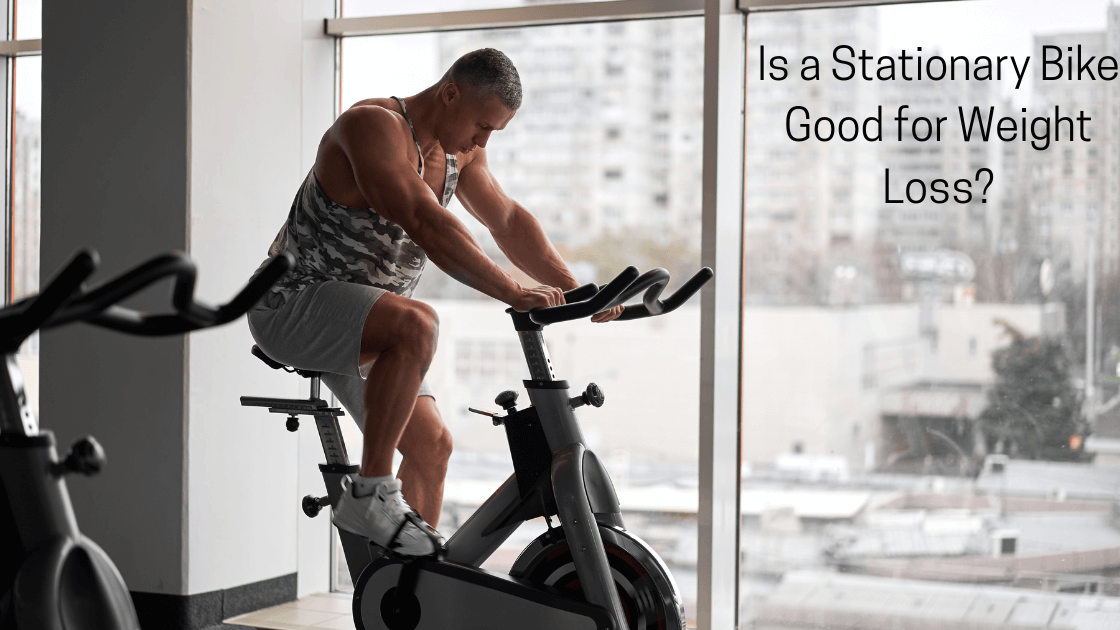
FAQ: Is a Stationary Bike Good for Weight Loss?
Can you lose belly fat by riding a stationary bike?
Yes, you can lose belly fat with a stationary bike, but it’s important to understand how fat loss works.
You can’t spot-reduce fat in one area; your body decides where fat comes off first. However, regular cycling helps burn calories and reduce overall body fat, which includes the belly.
In my experience, I noticed a significant reduction in waist size as my weight dropped. Pairing workouts with a smart eating strategy, like the 3×1 diet I followed, enhances these results even more.
How long should I ride a stationary bike to lose weight?
It depends on your current fitness level and goals. For beginners, 15–20 minutes daily can kickstart progress.
I started with just 16 minutes per day, following an interval structure, and it worked wonders. If you’re comfortable, extending sessions to 30–60 minutes can accelerate fat loss. Consistency matters more than duration. Even short workouts add up when done regularly.
Is a stationary bike better than a treadmill?
Both have benefits, but stationary bikes are often the better choice for those looking for a low-impact workout.
They’re easier on your knees, hips, and back, making them ideal if you’re overweight or have joint issues.
I found biking much more sustainable than running, especially during my early days when I was 106 kg and aching. It allowed me to stick with my routine pain-free.
Can you get in shape just on a stationary bike?
Absolutely. A stationary bike engages your legs, glutes, and core, providing a great cardiovascular and muscular workout.
Combined with a proper diet, it can lead to significant fat loss and muscle tone. That’s how I did it. I achieved this without the use of a gym or additional equipment, relying solely on the bike, the 3-1 diet, and maintaining consistency. Within 6 months, my fitness, energy levels, and confidence completely changed.
Key takeaways: Is A Stationary Bike Good for Weight Loss?
Yes, a stationary bike is not just good. It’s amazing for weight loss. But the real power comes when you combine it with the right diet and the right mindset.
Whether you’re beginning anew or resuming after a prolonged hiatus, have confidence in your ability to succeed. I did, and I’ve never looked back.