
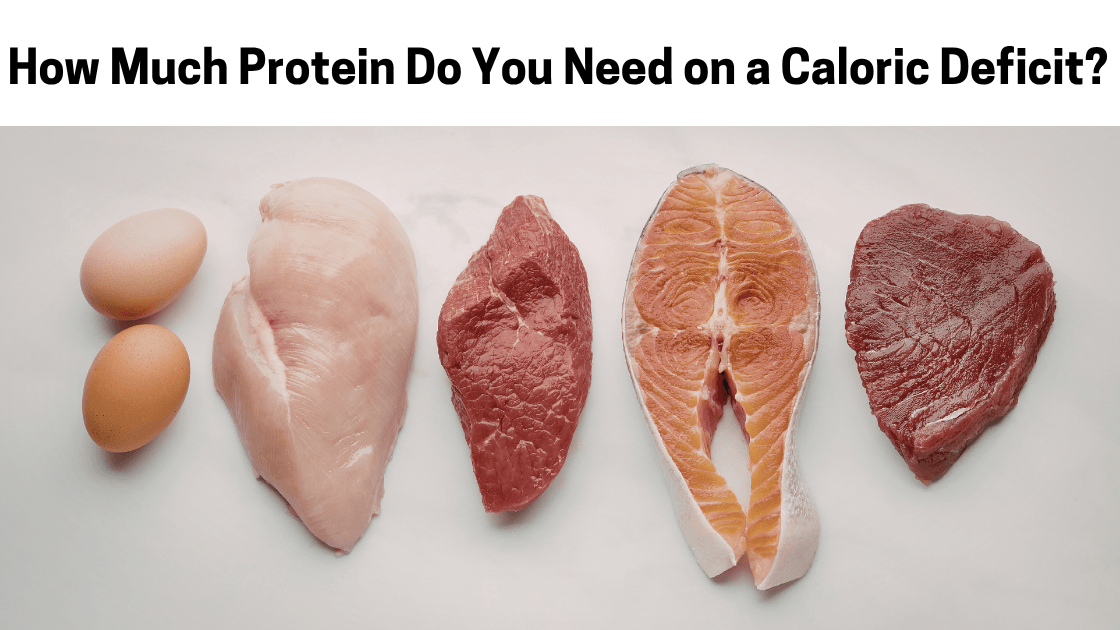

If you’re eating in a caloric deficit to lose weight, protein is the single most important macronutrient to get right.
Eat too little, and your body will cannibalize lean muscle for energy. Eat enough, and you protect that muscle, feel fuller for longer, and burn more calories even at rest.
In this guide, we break down exactly how much protein you need on a caloric deficit, why the standard recommendations fall short for dieters, and how to hit your targets every single day.
Why Protein Matters More on a Caloric Deficit
When you eat fewer calories than you burn, your body must pull energy from stored sources. Ideally, that’s body fat.
But without adequate protein, your body will also break down lean muscle tissue a process called catabolism.
This is a problem for several reasons. Muscle tissue is metabolically active, meaning it burns calories even at rest.
Losing muscle reduces your basal metabolic rate (BMR), making future fat loss harder and weight regain more likely.
Protein combats this by doing three critical things during a deficit:
| KEY BENEFITS Muscle preservation High protein intake signals your body to spare muscle tissue, even in an energy deficit. Studies show that dieters eating 2.4g of protein per kg of bodyweight retain significantly more lean mass than those eating the standard 0.8g/kg. Satiety Protein is the most satiating macronutrient. It suppresses hunger hormones like ghrelin and boosts fullness hormones like PYY, making it easier to sustain a deficit. Thermic effect Your body burns roughly 20-30% of protein calories just digesting it – far more than the 5-10% for carbs or 0-3% for fat. |
How Much Protein Do You Actually Need?
The official Recommended Dietary Allowance (RDA) for protein is just 0.8 grams per kilogram of bodyweight (about 0.36g per pound).
But this figure was never designed for people trying to lose fat while preserving muscle. It’s the bare minimum to prevent deficiency in sedentary individuals.
For anyone eating in a caloric deficit, especially those who exercise, the research is detailed. You need significantly more.
| Population | Recommended Protein | Source |
|---|---|---|
| General sedentary adult | 0.8 g/kg bodyweight | Official RDA (minimum) |
| Active adult on a deficit | 1.6–2.2 g/kg bodyweight | Sports nutrition research |
| Resistance-trained dieter | 2.0–2.4 g/kg bodyweight | Journal of the ISSN |
| Obese individual (deficit) | 1.2–1.5 g/kg lean body mass | Layman et al., 2004 |
| Older adults (55+) | 1.5–2.0 g/kg bodyweight | Phillips & Van Loon, 2011 |
A useful, practical rule: aim for 0.7–1.0 grams of protein per pound of bodyweight (or 1.6–2.2g per kg).
For most people eating in a deficit, the higher end of this range is safer and more effective.
| QUICK EXAMPLE A 175-pound (79 kg) person eating in a caloric deficit should aim for 123–175 grams of protein per day. At 0.8g/kg, they’d only get 63g, barely enough to prevent deficiency, and far too little to protect muscle during weight loss. |
Protein Recommendations by Goal
| FAT LOSS ONLY 0.7–0.8g per lb bodyweight | FAT LOSS + CARDIO 0.8–0.9g per lb bodyweight | FAT LOSS + LIFTING 0.9–1.1g per lb bodyweight | AGGRESSIVE DEFICIT 1.0–1.2g per lb bodyweight |
The more aggressive your caloric deficit and the more you exercise, particularly resistance training, the higher your protein needs.
When calories are very low, protein does extra work, preventing muscle breakdown.
What About Protein for Older Adults?
Adults over 55 experience a natural decline in muscle protein synthesis, a phenomenon called anabolic resistance.
This means older adults need more protein per serving to trigger the same muscle-building response as younger people.
For older dieters, targeting the higher end of the range (1.0–1.2g per pound) is strongly advisable.
Best Protein Sources for Fat Loss
Not all protein sources are equal on a caloric deficit. The best choices are high in protein, lower in calories, and come with beneficial nutrients rather than excessive saturated fat or added sugars.
Animal Proteins
- Chicken breast: 31g protein per 100g
- Turkey breast: 29g protein per 100g
- Canned tuna: 25g protein per 100g
- Egg whites: 11g protein per 100g
- Lean beef: 26g protein per 100g
- Salmon: 20g protein per 100g
Dairy & Eggs
- Greek yogurt: 10g protein per 100g
- Cottage cheese: 11g protein per 100g
- Whole eggs: 13g protein per 100g
- Low-fat cheese: 25g protein per 100g
- Skyr: 11g protein per 100g
Plant-Based Sources
- Tempeh: 19g protein per 100g
- Edamame: 11g protein per 100g
- Lentils: 9g protein per 100g (cooked)
- Tofu: 8g protein per 100g
- Black beans: 9g protein per 100g
Protein Supplements
- Whey protein: ~24g per scoop
- Casein protein: ~25g per scoop
- Pea protein: ~21g per scoop
| PRO TIP On a caloric deficit, prioritize lean protein sources to get maximum protein for minimum calories. A chicken breast gives you 30g of protein for around 165 calories, while the same weight of chicken thigh with skin delivers 20g of protein for 250 calories. |
Does Protein Timing Matter?
While total daily protein intake is the most important factor, timing can optimize your results especially if you’re exercising.
Spread protein throughout the day
Research suggests muscle protein synthesis is maximized when protein is spread across 3–5 meals rather than eaten in one or two large servings.
Aim for 25–40g of protein per meal, which provides enough leucine the key amino acid that triggers muscle building, to maximally stimulate synthesis.
Post-workout protein
Consuming 20–40g of protein within 1–2 hours of resistance training is beneficial for muscle repair and recovery.
The post-workout “anabolic window” is wider than often claimed, but getting protein in around your training sessions is still a good habit.
Pre-sleep protein
A slower-digesting protein like casein (found in cottage cheese or casein protein powder) before bed can support overnight muscle protein synthesis particularly useful for those in an aggressive caloric deficit.
Common Protein Myths: Debunked
Myth
Your body can only absorb 30g of protein per meal.
| REALITY Your body can absorb and utilize all the protein you eat. It just processes it at different speeds. Eating 60g of protein in one sitting won’t cause half of it to go to waste; it simply takes longer to digest. The 30g “limit” refers to the optimal amount for maximizing muscle protein synthesis per meal, not absorption capacity. |
Myth
High-protein diets damage your kidneys.
| REALITY In healthy individuals with no pre-existing kidney conditions, research consistently shows that high protein intake, even at 2.5–3.3g/kg bodyweight, does not harm kidney function. The concern applies only to those with diagnosed kidney disease. |
Myth
More protein always means more muscle.
| REALITY There’s a ceiling effect. Consuming more than about 2.2–2.4g/kg bodyweight produces no additional muscle-sparing benefit on a deficit. Beyond that threshold, excess protein is simply used for energy — it’s not harmful, but it’s also not more effective. |
Myth
Protein powders are necessary.
| REALITY Whole food protein sources are perfectly adequate. Supplements are convenient tools for hitting targets, not magic formulas. That said, if whole foods leave you consistently short of your goal, a quality protein powder is a sensible addition. |
Practical Tips to Hit Your Protein Targets
Build meals around protein first
Start every meal by deciding on your protein source, then add vegetables, complex carbs, and healthy fats around it.
This simple mental shift makes it dramatically easier to hit your daily target without going over calories.
Batch cook your proteins
Spend 30–60 minutes on the weekend grilling chicken breasts, hard-boiling eggs, or cooking a large batch of ground turkey. Having protein-rich food ready to go removes the biggest barrier to consistent intake.
Use high-protein swaps
Replace regular yogurt with Greek yogurt (3x the protein). Swap pasta for lentil pasta. Choose cottage cheese as a snack instead of chips.
These simple substitutions can add 20–30g of protein to your day without any extra effort.
Track your intake (at least temporarily)
Use a free app like MyFitnessPal or Cronometer for a few weeks to understand where your protein actually comes from.
Most people significantly overestimate their protein intake until they track it. Even a few weeks of logging creates lasting awareness.
| BOTTOM LINE You don’t need to obsess over protein forever. Get comfortable with what 150g+ of protein looks like in practice, build a few reliable high-protein meals, and you’ll hit your targets without logging every gram indefinitely. |
FAQ: How Much Protein Do You Need on a Caloric Deficit?
Here are the most common questions readers ask about protein intake on a caloric deficit.
Can I eat too much protein on a caloric deficit?
For healthy individuals, it is very difficult to eat a harmful amount of protein. Even intakes as high as 3.3g/kg bodyweight have been studied without negative effects.
That said, there’s a practical ceiling: once you’re above 2.2–2.4g/kg, you get no additional muscle-sparing benefit.
Eating more protein than you need simply means fewer calories left for carbs and fats, which can affect energy and diet satisfaction.
Focus on hitting your target range rather than maximizing protein at all costs.
Should I base my protein intake on current bodyweight or goal bodyweight?
If you are significantly overweight, basing protein intake on your total current bodyweight can overestimate your needs, since excess fat mass doesn’t require protein the way lean tissue does.
In that case, use your lean body mass (total weight minus fat weight) or your goal bodyweight as the basis for your calculations.
For most people who are mildly to moderately overweight, current bodyweight is a fine and simple reference point.
What happens if I don’t eat enough protein on a deficit?
Insufficient protein during a caloric deficit leads to muscle catabolism your body breaks down lean muscle tissue to meet its energy and amino acid needs.
This lowers your resting metabolic rate, reduces strength, and leaves you looking ‘skinny fat’ rather than lean and toned.
You may lose scale weight, but a higher proportion of that weight will be muscle rather than fat.
This is why protein intake is arguably more important during a cut than at maintenance.
Is plant-based protein as effective as animal protein for muscle preservation?
Plant proteins are generally less bioavailable and lower in leucine the amino acid most responsible for triggering muscle protein synthesis, compared to animal proteins.
However, this can be largely offset by eating slightly more total protein and combining complementary plant sources (such as rice and beans, or lentils and quinoa).
Vegan and vegetarian dieters can absolutely preserve muscle on a deficit; they simply need to be more intentional about protein sources and may benefit from targeting the higher end of the recommended range.
Do I need protein shakes on a caloric deficit?
No, protein shakes are a convenient supplement, not a requirement. Whole food sources like chicken, fish, eggs, Greek yogurt, and legumes can meet your protein needs entirely.
That said, protein shakes can be a useful tool when whole foods are impractical or when you’re consistently falling short of your daily target.
If you do use a protein powder, whey or casein are excellent options for those who consume dairy; pea protein is a well-researched plant-based alternative.
How does protein intake affect hunger on a caloric deficit?
Protein is the most satiating macronutrient, largely due to its effects on gut hormones like GLP-1, PYY, and ghrelin.
High-protein diets consistently reduce appetite and spontaneous calorie intake in research settings.
Practically, this means that hitting your protein target on a deficit makes the whole process easier you feel more satisfied between meals, and are less likely to snack impulsively.
Prioritizing protein is one of the most evidence-based strategies for diet adherence.
How long does it take to see results from eating more protein on a deficit?
Muscle preservation benefits begin immediately when you’re reducing catabolism from your first high-protein day.
In terms of visible results, most people notice improved body composition (more muscle relative to fat) within 4–8 weeks when combining adequate protein with a modest caloric deficit and resistance training.
The scale may not always reflect this, since muscle is denser than fat. Tracking measurements and how clothes fit is often more informative than scale weight alone.
Can I build muscle while eating in a caloric deficit?
True simultaneous muscle gain and fat loss often called ‘body recomposition,’ is possible, but it’s most achievable in specific situations: beginners to resistance training, individuals returning after a break, and those who are significantly overweight.
In these cases, the body can use stored fat to fuel muscle growth even in a caloric deficit, especially with adequate protein and consistent resistance training.
For experienced, leaner athletes, a true recomp is slower and more difficult; they typically alternate between deliberate bulking and cutting phases for better results.
Key Takeaways
- The standard RDA of 0.8g/kg is too low for anyone actively trying to lose fat and preserve muscle.
- Aim for 0.7–1.0g of protein per pound of bodyweight (1.6–2.2g/kg) on a caloric deficit.
- The more you exercise, especially weight training, the higher your protein needs.
- Spread protein across 3–5 meals of 25–40g each for optimal muscle protein synthesis.
- Older adults (55+) should target the upper end of the range due to reduced anabolic sensitivity.
- Prioritize lean whole food sources; use protein supplements as a convenient top-up, not a foundation.
- High protein intake is safe for healthy individuals and will not harm kidney function.