15% Body Fat: What It Looks Like, How Long It Takes, and How to Actually Get There
Posted in :

If you’ve spent any time in fitness spaces, you’ve heard the number thrown around constantly: 15% body fat. It’s the sweet spot that fitness coaches recommend, the benchmark that shows up in body composition charts, and the goal quietly scribbled in countless workout journals.
But what does 15% body fat actually look like on a real body? Is it healthy? How long will it realistically take to get there and what does it take to stay there without making your entire life about dieting?
This guide covers everything: the science, the visuals, the timeline, the strategy, and the common mistakes that keep people stuck.
What Does 15% Body Fat Mean?
Body fat percentage measures the proportion of your total weight that comes from fat, as opposed to muscle, bone, organs, and water. At 15% body fat, 15% of your body weight is fat mass, and the remaining 85% is lean tissue.
This is where body fat percentage becomes far more useful than the scale or BMI alone.
Two people can weigh the same and look completely different depending on their muscle-to-fat ratio.
Someone at 180 lbs and 15% body fat will have a visibly different physique than someone at 180 lbs and 25% body fat, even though the scale shows the same number.
According to the American Council on Exercise (ACE), body fat categories for men generally run as follows:
| Category | Men | Women |
|---|---|---|
| Essential Fat | 2–5% | 10–13% |
| Athletes | 6–13% | 14–20% |
| Fitness | 14–17% | 21–24% |
| Average | 18–24% | 25–31% |
| Obese | 25%+ | 32%+ |
For men, 15% body fat sits at the upper boundary of the “Athletes” category and the lower boundary of “Fitness.”
For women, the same number of 15% places them in the elite athlete category, which is an important distinction we’ll cover in detail.
What Does 15% Body Fat Look Like?
Men at 15% Body Fat
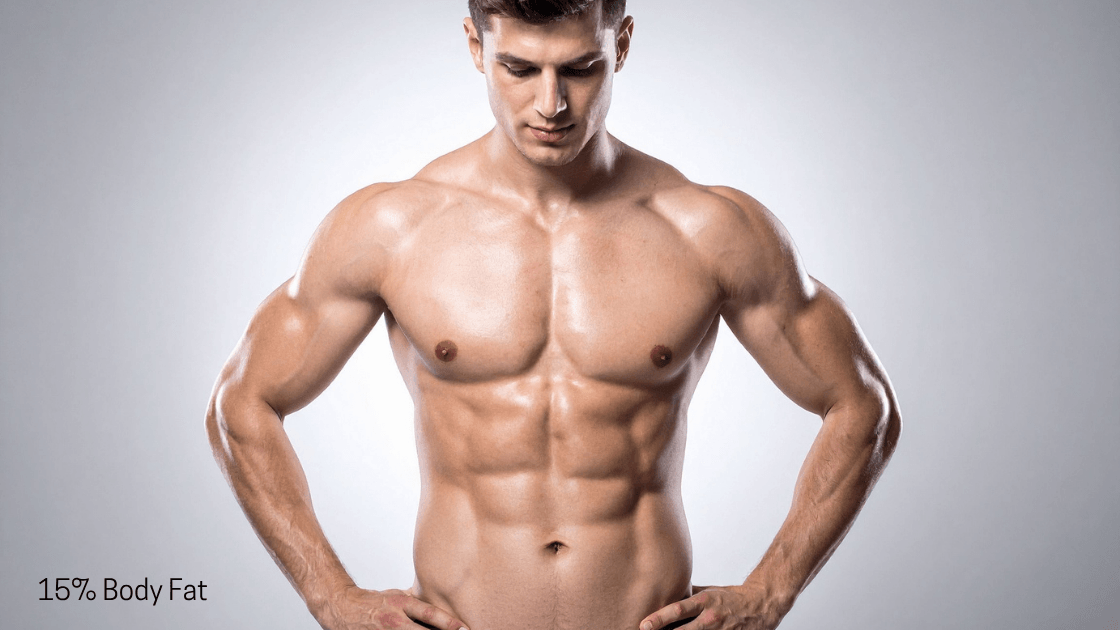
Men at 15% body fat typically display a lean, athletic appearance that most people would describe as “fit” without being extreme. Common physical characteristics include:
Abdominal definition
The outline of the upper abs is usually visible, though a fully chiseled six-pack typically appears at lower percentages (closer to 10–12%). There is a clear definition in the midsection, but it’s not sharply cut.
Muscle shape
Shoulders, chest, and arms show visible muscle shape and some separation, though striations (the fine lines within individual muscles) are minimal.
Vascularity
Limited vein visibility, perhaps noticeable in the forearms but not prominent elsewhere.
Face and jawline
A noticeably more defined jawline and less fullness around the face compared to higher body fat percentages.
Overall appearance
The look is “fit and healthy” rather than “shredded.” There is still a slight layer of subcutaneous fat (fat just beneath the skin), which gives a natural, healthy appearance rather than a depleted one.
For context, a man at 20% body fat will typically have no visible ab definition and a soft midsection, while a man at 10% will show sharp ab definition and significant vascularity.
At 15%, you’re clearly above average in leanness without the extreme demands of competition-level body fat.
Women at 15% Body Fat
Here is where an important distinction must be made: 15% body fat means something very different for women than it does for men.
While 15% is comfortably in the “fitness” range for men, it places a woman in the athlete category, a genuinely lean, athletic physique that requires dedicated effort to achieve and maintain.
Women at 15% body fat typically display.
- Visible muscle definition in the arms, shoulders, and legs is noticeably more than what most people would call “toned.”
- A flat, defined midsection with visible abdominal lines, though not necessarily a full six-pack
- Strong lower-body shape with clear muscle definition in the quads and glutes
- A more defined face and jawline compared to higher body fat percentages
- Very little visible body fat, giving a tight, lean appearance throughout
The biological reason for this difference comes down to essential fat — the minimum fat the body requires to function.
Men need only 2–5% essential fat, while women require 10–13% due to the physiological demands of reproductive health, hormonal function, and fat stored in breast tissue.
Because women carry more essential fat as a baseline, a woman at 15% total body fat is operating with significantly less non-essential (storage) fat than a man at the same number.
In practical terms, a woman at 15% body fat is an elite, shredded athlete; a man at 15% body fat is a fit, active, everyday person.
Is 15% Body Fat Healthy?
For most men, yes, definitely. 15% body fat is associated with meaningful health benefits without requiring extreme restriction or unsustainable habits.
For women, 15% can be appropriate, particularly for dedicated athletes, but it warrants more individual consideration.
Some women thrive at this level; others feel better with slightly more body fat. The key factor is energy availability, ensuring you’re eating enough to support training and hormonal health.
Chronically under-fueling at this level can contribute to what sports medicine professionals call Relative Energy Deficiency in Sport (RED-S), which can affect menstrual function and bone health.
Health benefits at 15% body fat include
For men, the health benefits at 15% body fat include.
Improved insulin sensitivity
Lower body fat especially reduced visceral fat (fat stored around the organs), is directly linked to better blood sugar regulation and a reduced risk of type 2 diabetes.
Better hormonal balance
Excess body fat, particularly in men, is associated with lower testosterone levels. At 15%, hormone levels tend to be well-supported.
Reduced cardiovascular risk
Research consistently links healthy body fat percentages to lower risks of cardiovascular disease, high blood pressure, and metabolic syndrome.
Sustainable maintenance
Unlike body fat percentages at the extremes (sub-10% for men, sub-15% for women), 15% is a level most people can realistically maintain year-round without constant dietary restriction.
You can train hard, eat normally, and sustain this physique as a lifestyle rather than a temporary state.
How to Measure Your Body Fat Percentage
Before setting 15% as your goal, you need an accurate starting point. Here’s a rundown of the most practical measurement methods:
DEXA Scan (Most Accurate)
Dual-Energy X-ray Absorptiometry is widely regarded as the gold standard for body composition analysis.
A DEXA scanner uses two low-dose X-ray beams to differentiate between bone, lean tissue, and fat mass, providing a comprehensive breakdown of your body composition, including visceral fat levels.
DEXA scans typically cost between $75–$150 and take 10–20 minutes at a specialized facility. For the most accurate baseline measurement, this is the method worth investing in.
One important note: DEXA scanners can be calibrated using different methods (Classic vs. NHANES calibration), which can produce different readings. If you’re comparing results across different facilities, ask about their calibration method.
Skinfold Calipers (Best Budget Option)
Skinfold calipers measure the thickness of subcutaneous fat at specific body sites, which is then plugged into validated formulas to estimate total body fat percentage.
When performed correctly by a trained technician using a multi-site protocol (such as the Jackson-Pollock 7-site method), calipers can be accurate to within 2–4% of DEXA.
Calipers are inexpensive and widely available, making them a practical option for regular tracking.
The catch: technique matters enormously. Consistency is more important than absolute accuracy measures at the same sites, at the same time of day, under the same conditions.
Bioelectrical Impedance Analysis (BIA)
Smart scales and handheld BIA devices estimate body fat by sending a small electrical current through the body and measuring resistance.
These are convenient but can vary by 4–7% compared to DEXA, and are highly sensitive to hydration levels.
BIA can be useful for tracking trends over time if you measure consistently, but shouldn’t be relied on for single-point accuracy.
US Navy Tape Measure Method
A formula using circumference measurements (neck, waist, and hips for women) provides a body fat estimate that research suggests can be within 4% of DEXA when done carefully.
Free calculators are widely available online. This method requires no equipment beyond a cloth tape measure and is a reasonable option for at-home tracking.
Bottom line: For an accurate baseline, get a DEXA scan or have a trained professional measure you with skinfold calipers.
For ongoing progress tracking, choose one consistent method and stick to it. Consistency beats precision for monitoring change over time.
Realistic Timeline: How Long Does It Take to Reach 15% Body Fat?
This is the question most people actually want answered. The honest answer: it depends on where you’re starting. Here’s a breakdown by starting point:
Starting at 20% Body Fat (Men)
This is one of the most common scenarios, visibly “soft” but not significantly overweight, with no real ab definition.
Timeline
Most people can move from 20% to 15% in 10–16 weeks with a smart approach. That means losing roughly 0.5–1% of total body weight per week, a rate that preserves muscle while burning fat.
At a 500-calorie daily deficit, you’d lose approximately half a kilogram of fat per fortnight. Add consistent strength training to preserve (or build) muscle, and you’ll see meaningful visual changes within 4–6 weeks, with the full transformation visible by week 10–16.
Starting at 25% Body Fat (Men)
A larger deficit of fat to lose means a longer journey.
Timeline
Expect 16–24 weeks (4–6 months) with a structured, sustainable approach. This is long enough to warrant building in planned diet breaks 1–2 weeks at maintenance calories, to prevent metabolic adaptation and maintain adherence.
Starting at 30% Body Fat (Men)
This is a significant body composition change that requires a phased approach.
Timeline: Realistically, 5–10 months, depending on deficit size and adherence. The strategy here isn’t to sprint, it’s to move through structured phases with maintenance breaks built in, rather than dieting straight through.
Women’s Timeline Consideration
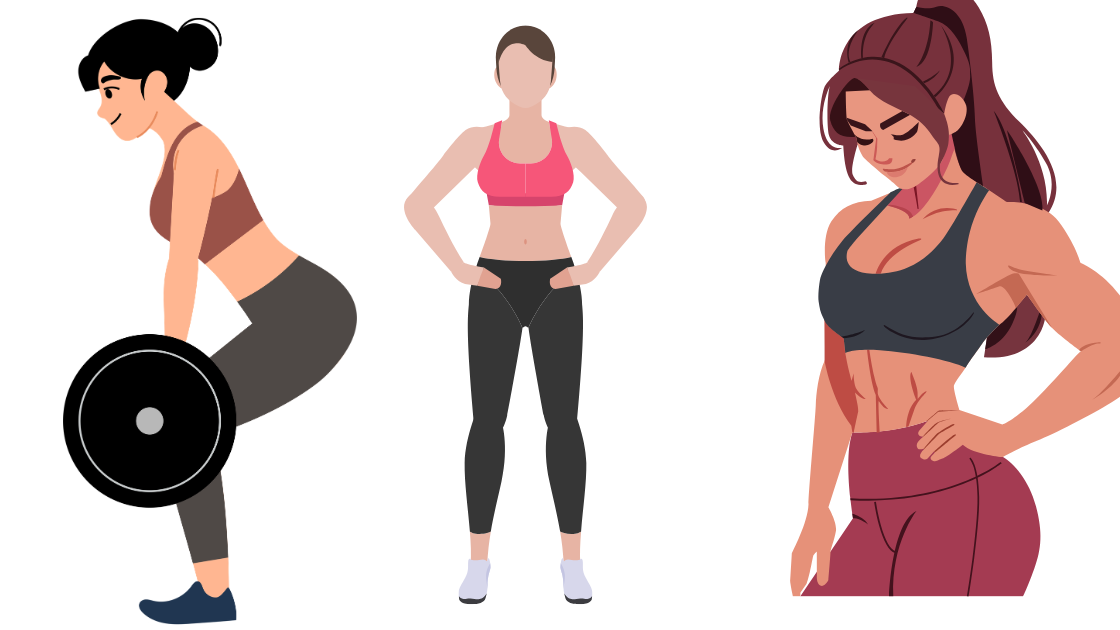
Women typically carry more essential fat and have more natural fat storage differences due to hormonal and reproductive physiology.
What looks like 15% on a man in terms of appearance and health may be closer to 22–25% body fat for a woman.
Women also tend to experience more water retention variability throughout the monthly cycle, which can obscure week-to-week progress on the scale.
Track measurements and progress photos alongside scale weight for the most accurate picture of progress.
Key principle for everyone
The rate of fat loss should be approximately 0.5–1% of total body weight per week. Faster than this risks significant muscle loss; slower than this is often unnecessary and harder to sustain motivationally.
How to Get to 15% Body Fat: The Evidence-Based Strategy
Establish a Moderate Calorie Deficit
Fat loss requires consuming fewer calories than you burn. There’s no workaround. A daily deficit of 300–500 calories is the sweet spot for most people:
- Large enough to produce consistent fat loss
- Small enough to preserve muscle mass and energy levels
- Sustainable enough to maintain adherence over weeks or months
Avoid aggressive deficits of 1,000+ calories per day. While the initial scale movement looks impressive, a large portion of that loss comes from muscle and water rather than fat, leaving you lighter but softer, not the outcome you’re after.
Prioritize Protein
Protein is the single most important dietary variable for body recomposition. During a calorie deficit, adequate protein:
- Preserves lean muscle mass
- Increases satiety, making the deficit easier to sustain
- Has a higher “thermic effect” than carbs or fat (your body burns more calories processing it)
A good target: 0.7–1g of protein per pound of body weight per day. For a 180 lb person, that’s 126–180g of protein daily.
Prioritize sources like lean meats, fish, eggs, Greek yogurt, cottage cheese, and protein supplements as needed.
Strength Train Consistently
Cardiovascular exercise burns calories, but strength training is what preserves (and builds) the muscle that gives 15% body fat its distinctive lean, athletic look.
Without resistance training, fat loss often results in a “skinny fat” physique, lower on the scale, but soft and undefined.
Aim for 3–4 strength training sessions per week, focusing on compound movements (squats, deadlifts, bench press, rows, overhead press).
Maintain your key lifts if your strength drops significantly; your deficit may be too aggressive.
Add Strategic Cardio
Cardio isn’t mandatory for fat loss, but it’s a useful tool for creating additional calorie burn without further restricting food intake.
Low-intensity steady-state cardio (LISS) walking, cycling, or rowing at a comfortable pace is particularly effective because it burns calories without significantly taxing recovery from strength training.
HIIT (High-Intensity Interval Training) is time-efficient and effective, but should be used sparingly (1–2 sessions per week maximum) to avoid interfering with strength training recovery.
Sleep and Stress Management
Often overlooked, but evidence is clear: poor sleep and chronic stress both impair fat loss through hormonal mechanisms.
Inadequate sleep elevates cortisol (promoting fat storage, particularly visceral fat), reduces leptin (the fullness hormone), and increases ghrelin (the hunger hormone).
Prioritizing 7–9 hours of quality sleep per night isn’t optional for optimal results — it’s part of the program.
Plan for Plateaus
Metabolic adaptation is real. As you lose weight, your body burns fewer calories at rest.
This is normal; it’s not a malfunction, it’s your body adapting to a new normal.
When progress stalls for two or more weeks, you have a few options:
- Reduce calories by a further 100–200 per day
- Add a modest increase in daily activity (more steps, an extra cardio session)
- Take a diet break, eating at maintenance calories for 1–2 weeks before returning to a deficit
Research suggests that cycling between deficit and maintenance phases may produce better long-term results than continuous dieting, while also being more sustainable mentally.
Common Mistakes That Stall Progress
Cutting calories too aggressively. This leads to muscle loss, metabolic adaptation, and is very difficult to sustain. Slow and steady wins here.
Doing too much cardio, too little strength training. Cardio burns calories, but without resistance training, the resulting physique lacks the muscle definition that makes 15% body fat look the way it should.
Not tracking food. Most people significantly underestimate their caloric intake. Even a casual tracking approach using an app for a few weeks creates the awareness needed to hit your targets consistently.
Using the scale as the only progress metric. Body weight fluctuates by 1–3 lbs daily based on water retention, food volume, and hormonal cycles. Track progress photos, measurements, and how clothes fit alongside scale weight.
Comparing men’s and women’s physiques at the same percentage. A woman at 15% body fat is not equivalent to a man at 15%; she is carrying far less non-essential fat and has an elite athlete physique.
If a woman’s goal is to look “lean and fit,” a target closer to 20–22% body fat is often more appropriate and sustainable.
Maintaining 15% Body Fat
Getting to 15% is one challenge. Staying there is another.
The good news: 15% body fat is highly sustainable compared to leaner ranges. You don’t need to track every calorie forever, avoid social eating, or spend hours in the gym every day. The foundation for maintenance is:
- Consistent strength training (3–4 days per week)
- Protein-forward eating habits, not strict tracking, but general awareness
- Regular activity, daily walking, and an active lifestyle go a long way
- Periodic check-ins weighing yourself weekly, and noticing trends, so you can course-correct early rather than having to do a prolonged cut later
People who successfully maintain low body fat percentages long-term tend to have built genuine lifestyle habits rather than following a temporary “diet.” The best nutrition approach is the one you can actually maintain.
Frequently Asked Questions
Is 15% body fat enough to have visible abs?
For most men, 15% body fat shows the outline of the upper abs, but a fully defined, separated six-pack typically requires dropping below 12–13%. At 15%, you’ll look lean and athletic with clear ab definition, just not fully chiseled.
Is 15% body fat good for a woman?
Yes, but context matters. For women, 15% is in the athlete category, an impressive and genuinely lean physique.
It requires dedicated effort to achieve and careful attention to nutrition to maintain without impacting hormonal health.
Women whose goal is simply to look “fit and toned” may find a target of 20–22% more sustainable and appropriate.
How accurate are body fat scales from the pharmacy?
Not very, at least for absolute accuracy.
Consumer BIA devices can be off by 4–7% compared to DEXA due to sensitivity to hydration levels.
They can be useful for tracking directional change over time if you measure consistently, but don’t rely on a single reading to determine your exact body fat percentage.
Can you build muscle while cutting to 15% body fat?
For beginners and those with higher starting body fat percentages, yes body recomposition (simultaneous fat loss and muscle gain) is achievable.
For experienced trainees who are already relatively lean, true muscle gain during a calorie deficit is limited. The goal during a cut is typically to preserve muscle while losing fat.
Does genetics affect where fat is stored at 15% body fat?
Yes, significantly. Where remaining fat is located, whether in the abdomen, love handles, hips, thighs, or elsewhere, is largely determined by genetics and hormones.
Fat distribution is not something you can directly control through exercise or diet, though overall fat reduction will reduce fat in all areas over time.
What should I eat to reach 15% body fat?
No specific “diet” is required. A moderate calorie deficit with high protein intake is the core principle.
Beyond that, prioritizing whole foods, lean proteins, vegetables, fruits, legumes, whole grains, and healthy fats supports adherence, energy, and health. The best dietary approach is one you can realistically sustain.
The Bottom Line
15% body fat represents one of the most achievable, sustainable, and genuinely beneficial body composition goals for most adults particularly men.
It delivers visible lean muscle, meaningful health improvements, and a physique that looks athletic without the extreme demands of competition-level leanness.
Getting there requires a moderate calorie deficit, consistent protein intake, regular strength training, and patience, but not perfection.
The people who reach and maintain 15% body fat aren’t those who follow the most extreme program.
They’re the ones who build consistent habits, take an evidence-based approach, and stay the course when progress slows.
Start with an accurate body fat measurement, set a realistic timeline, and build the foundation habits that will carry you to your goal and keep you there.
Disclaimer: This article is for informational purposes only and does not constitute medical or nutritional advice. Consult a qualified healthcare provider or registered dietitian before making significant changes to your diet or exercise routine.